The End-of-Year ADHD Crash: Why Capable Kids Suddenly Can’t Cope
TL;DR
That end-of-year unravelling, more meltdowns, more tears, more “forgetting,” more sibling friction, usually isn’t a behaviour problem. It’s a brain that’s running low on fuel after months of hard work.
ADHD draws heavily on the same effortful skills used to sit still, be silent, follow instructions, manage feelings, and cope with sensory overwhelm. Pile those demands across a whole year and the reserves drain. So what looks like defiance is often exhaustion.
The fix isn’t more pressure. It’s decompression time, protected sleep, a lighter demand load for a few weeks, and calm scripts that give a child permission to land safely.
By the last few weeks of the school year, a lot of children who’d been coping reasonably well start to come apart. Tiny things tip them over. There’s more arguing and talking back, more crying, more clashes between siblings, more bad decisions, more “I forgot,” and a lot less flexibility than there was a year ago. The cooperation seems to have quietly leaked away, and the question that tends to follow is a fair one - Why did everything suddenly become so much harder?
Here’s the short answer, and it helps to know it before the next rough evening. What looks like defiance is often exhaustion. A child with ADHD has spent months doing things that cost their brain more effort than most people realise. By the end of the year, the tank is close to empty.
So the quickest thing that helps isn’t a fresh reward chart. It’s decompression. Build a quiet, low-demand gap into the moment they walk through the door, before homework, before questions about their day, before chores. Food, a drink, a soft landing, then connection. Most after-school storms settle once that gap exists.
Why the final stretch hits ADHD brains harder
ADHD isn’t only about attention. It leans heavily on the brain’s management system. That’s the cluster of skills we use to plan, hold instructions in mind, switch tasks, and hold back an impulse.
A 2014 review in the American Journal of Psychiatry looked at emotion and ADHD. Philip Shaw and colleagues led it. They found that difficulty managing emotions is common in ADHD right across the lifespan. It is also a major source of day-to-day struggle.
They estimated that somewhere between 25-50% of children with ADHD showed significant trouble with emotional regulation. A separate review by Judy van Stralen in Canada reached a similar point. She linked shaky emotional control directly to differences in those management skills.
Now think about what a school day actually asks of that system. Staying seated. Remaining silent. Being focused. Listening. Holding back comments. Sorting out a friendship wobble. Coping with a loud room, a scratchy sweater, and bright fluorescent lights overhead.
Each of those pulls from the same limited pool of effort. They aren’t free. And across a long year, with assessments, sports days, concerts, and end-of-term chaos stacked on top, the bill comes due.
There’s another hidden cost. Many children mask. That means they work hard to look fine and act “normal” at school, then release everything at home where it feels safe.
Research from University College London looked at this. It was an experience-sampling study by Julia Cook and colleagues. They found that this kind of camouflaging is genuinely draining.
So the child a teacher calls “no trouble at all” may be the one working hardest of anyone. That child can arrive home with nothing left. A 2023 review from researchers in Spain reached a related point. People with ADHD tend to fall back on less helpful ways of handling emotion. That makes a tired brain even quicker to tip over.
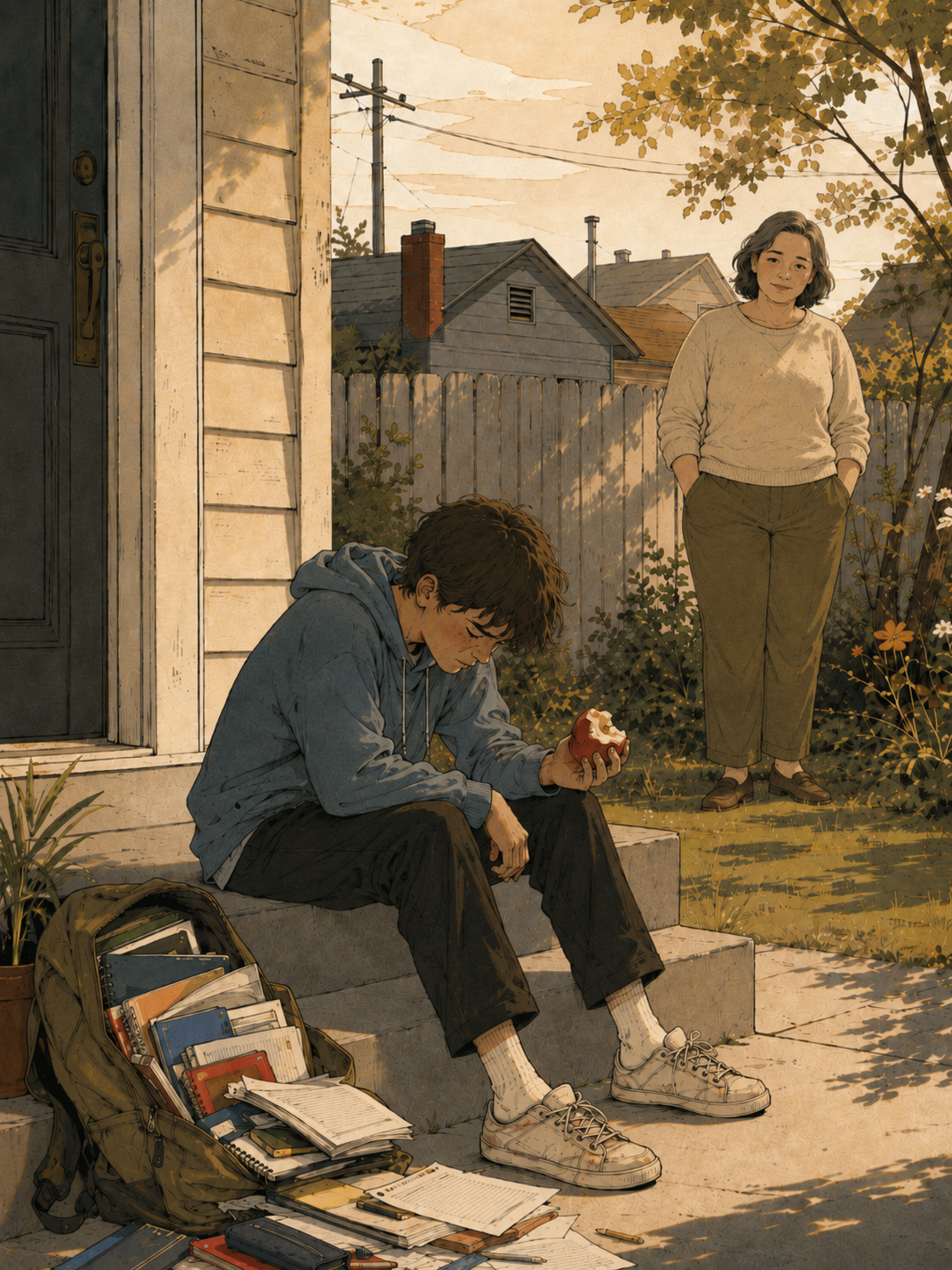
This after-school unravelling has a nickname: restraint collapse. It isn’t a formal medical term or diagnosis, but a pattern clinicians recognise easily. It’s especially common in children with ADHD or autism, as the team at Understood explains. The end-of-year crash is really restraint collapse over a longer stretch. Instead of one hard day, it’s months of holding it together, all catching up at once.
Sleep makes the whole thing wobblier. The NHS and the National Institute for Health and Care Research in the UK report on this. Almost 3 in 4 children with ADHD have sleep problems, and poor sleep tends to worsen behaviour and concentration the next day.
Lighter summer evenings, broken routines, and late nights all chip away at the rest a child needs to recover. It’s a loop. Treat sleep as a real need, not an optional extra.
A quick, honest note. Watch the timing. If the meltdowns line up with the hour, ADHD medication tends to wear off in the afternoon, raise it with the prescribing clinician. It’s a different thing from ordinary tiredness.
What helps
So how do you lighten the load without ignoring rules or dropping your standards? Temporarily reduce demands for a few weeks, not forever.
Drop an optional after-school activity that’s become a conflict point.
Continue to keep bedtimes consistently boring.
Break instructions into smaller steps so working memory isn’t overloaded.
Call out what’s going right, out loud.
A child who hears “You got your shoes on first time, thank you” is calmer than one who only hears corrections.
What to say in the moment
The words you reach for during a wobble matter more than any chart. Calm, short scripts work because they lower the pressure and tell a tired, nervous system it’s safe. Keep them brief, say them slowly, and mean them.
“You don’t have to talk yet. Eat something, and I’ll be right here.” Removes the pressure to perform or explain, and signals safety.
“Looks like today took a lot out of you. Let’s go quiet for a bit.” Name the state without an interrogation, which a depleted brain can’t handle.
“We’re parking homework for twenty minutes. Snack first.” Takes a demand off the pile so the load feels manageable.
“You held it together all day. You’re allowed to let it out here.” Gives permission to release safely instead of bottling it up again.
“One thing at a time. Shoes off, then we’ll sort the rest.” Eases the working-memory overload that fuels the “I can’t” response.
Conclusion
The end-of-year crash isn’t a sign that a child has stopped trying or that anyone’s parenting has gone wrong. It’s the visible edge of months of effort, in a brain that finds everyday self-control more tiring than most. The research is steady on this. Emotional regulation is genuinely harder with ADHD, masking costs real energy, and poor sleep tips an already-stretched system over the edge. Lower the pressure where you can, protect sleep and connection, lean on the supports that already help, and use calm words when things wobble. That’s not giving up. That’s matching the support to the season.
If this was useful, pass it to a friend, a teacher, or anyone in the thick of these last few weeks. For more, including free guided meditations for kids, printables, and other articles, visit the Calm Kids Club website at www.calmkidsclub.org.
References
Shaw, P., Stringaris, A., Nigg, J., & Leibenluft, E. (2014). Emotion dysregulation in attention deficit hyperactivity disorder. American Journal of Psychiatry, 171(3), 276 to 293. https://doi.org/10.1176/appi.ajp.2013.13070966
van Stralen, J. (2016). Emotional dysregulation in children with attention-deficit/hyperactivity disorder. ADHD Attention Deficit and Hyperactivity Disorders, 8(4), 175 to 187. https://doi.org/10.1007/s12402-016-0199-0
Cook, J., Crane, L., Bourne, L., Hull, L., & Mandy, W. (2021). Camouflaging in an everyday social context: An experience sampling study. Autism, 25(4), 1099 to 1114. https://doi.org/10.1177/1362361320968981
Soler-Gutiérrez, A. M., Pérez-González, J. C., & Mayas, J. (2023). Evidence of emotion dysregulation as a core symptom of adult ADHD: A systematic review. PLOS ONE, 18(1), e0280131. https://doi.org/10.1371/journal.pone.0280131
University Hospital Southampton NHS Foundation Trust & National Institute for Health and Care Research. (2022). Southampton researchers launch new study to help children with ADHD sleep better. https://www.uhs.nhs.uk/whats-new/press-releases/southampton-researchers-launch-new-study-to-help-children-with-adhd-sleep-better
Understood. Restraint collapse: When kids melt down after school. https://www.understood.org/en/articles/restraint-collapse-why-kids-fall-apart-after-school
Disclaimer: The information provided by The Calm Kids Club is for educational and informational purposes only and is not medical advice. We are not a medical or mental health organisation. Our content is not a substitute for professional medical consultation, diagnosis, or treatment. Always seek the advice of a physician or other qualified health provider with any questions regarding a medical condition. Never disregard professional medical advice or delay seeking it because of something you have read on this website. Reliance on any information provided by The Calm Kids Club is solely at your own risk.